Jack Benny: How Radio Made Comedy Grow Up
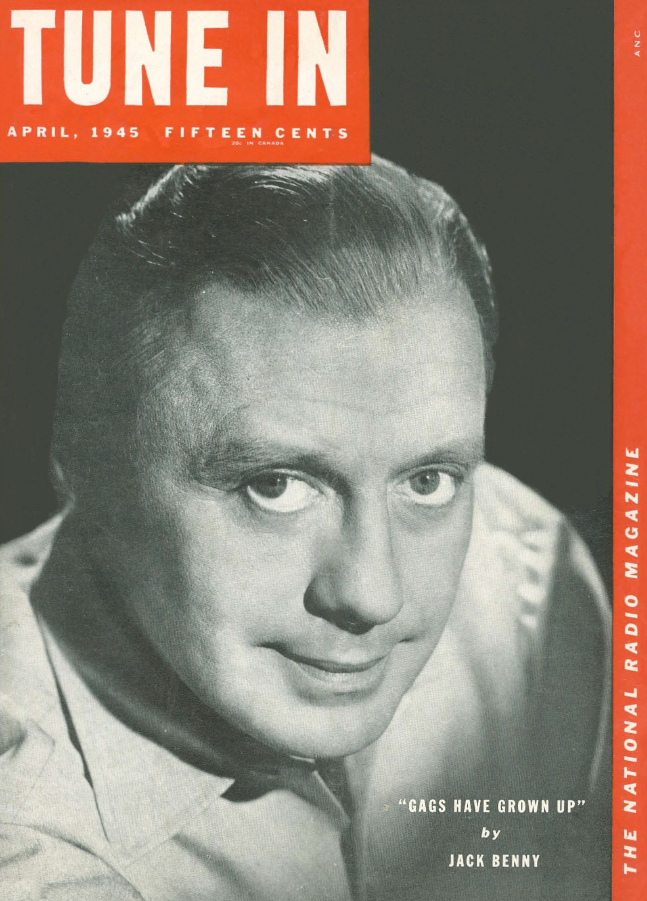
In the past 20 years, American humor -- accelerated by radio -- has come out of the barnyard. It has been cleaned up, perfumed and sparked by those unsung heroes, the gag writers. Today, the ether is so full of good gags that even the ghosts have hysterics.
I will go out on a limb to say that radio has done for American humor in 10 years what it would have taken vaudeville 50 years to reach. I feel no heartaches over vaudeville's passing, when I think of the way the old-time comic used to get his laughs. Gags were in their infancy then. They were as unsteady as a baby -- and had to be changed just as often. A comedian used to throw a gag at a vaudeville audience with a swing and a prayer, never knowing whether it would roll 'em in the aisle -- or roll up the joint. He might get howls with a certain gag at one show, and at the next the audience would look at him as though he had just read from page 26 of the Zanesville, Ohio, classified directory.
As a result, he desperately needed some sort of "gag insurance." He had to get laughs -- or else. His formula for this was pat. First, he pitched his opening gags across the footlights. If nothing happened, he tossed them his vary best gag, just to make sure that the audience was still there. Then -- if nothing but cigar smoke came back -- he played his trump card. A concealed tug at his belt, a deft wiggle ... and his pants fell down.
That was always sure for a laugh -- until, with dozens of comics doing the same thing all over the country, even this trick grew stale. So new tricks were added. I remember one comic who got thrown off the circuit because his underwear lit up and played "The Star-Spangled Banner."
Gags have grown up since then, and radio methods are quite different. Just contrast the old vaudeville routine for insuring gags with what we have today. Our gag insurance doesn't rely on slapstick but upon what we call a "topper." We then get a topper to top a topper -- and perhaps one to top that, as illustrated by the following dialogue used by Mary Livingstone and Rochester on our program:
Mary: You say you just got in town, Rochester. What took you so long ... was the train late?
Rochester: What train? I was out on Highway 99 freelancing.
Mary: You mean you hitchhiked. Why?
Rochester: Well, instead of a train ticket, Mr. Benny gave me a road map.
Mary: Oh.
Rochester: And a short talk on the generosity of the American tourist.
Mary: You mean that's all Mr. Benny gave you?
Rochester: No ... he also gave me a white glove for night operations.
There you have three toppers, all on the same gag. That's the kind of insurance that you, as a comedian, can feel safe with. It's like holding a ticket on every horse in the race. It's safer, more dignified -- and saves a lot of wear and tear on your pants.
Some people think that comedians and gag men are responsible for bringing American humor out of its giggly youth to manhood. While it would be nice to take the credit, our overtaxed consciences won't stand the strain. No, it's the audience who shoved the "little men" up to voting age.
The clamor for something better and still better has made necessary the same strides in gags as in automobiles and planes. When your gags and routines start lying around on the stage like old eggs from the same tired basket, and your audience reacts to your stuff as though they had lockjaw ... brother, you'd better start looking for better material -- or a rich widow!
The public today demands more of its humor than "a laugh at any price." It resents too much insulting, too much cynicism In short, the public likes good comedy, but it likes good taste even better. I have found that a gag line with too much sting is about as funny to people as a trial fitting for the electric chair.
You've probably noticed that nobody ever gets hurt on our program. Of course, I am subjected to quite a little shoving around -- I'm supposed to be a braggart, I'm supposed to wear a toupee, I'm supposed to be stingy -- but it's all in the spirit of fun! We try to follow one simple rule: "If it hurts, it isn't funny." (Naturally, however, I reserve the right to modify this, in the case of Fred Allen.)
Basically, our show is built on a foundation of real people -- not burlesque characters, but ordinary, everyday people. I'd be willing to bet that there are very few of you who don't know people exactly like Mary, Phil Harris and Rochester, as they are represented on our program. Yes, and there are lots of others who are just as dumb as Dennis Day was on our program (though I'm apparently having a tough time finding one dumb enough to work for the same money as he did.)
We feel that, to a certain extent, we represent the audience. In us, they see themselves. It would be foolish for us to knock each other around, because then we would be knocking the audience around ... and when you start doing that -- well, your sponsor had better be your own brother-in-law.
However, one of America's greatest national characteristics is our ability to laugh at ourselves. When the audience sees themselves through us, they get a special kick out of the jokes that seem to fit them personally. If someone pulls a gag on me about my having false teeth, 98 percent of those in our audience who have false teeth will laugh heartily. (The other two percent would laugh, too, but their gums are still sore.)
Throughout, we try to have things happen to us which would happen to anyone -- things which will be interesting and also, above all, funny. That's why so many of our routines and gags come from what we see around us -- like all that water, when we were coming from Vancouver to Seattle by boat.
We were all on the top deck enjoying the beautiful scenery ... all, that is, except Phil Harris. Harris was down in his stateroom asleep. He isn't very interested in water -- thinks there's too much of it to give it any value. I know this because, once when I was talking to Phil about the earth and how it was three-fourths covered with water, he said, "Yeah. You know, Jackson, I think the Creator slipped up a little there. He could have just as easy made it bourbon!"
Well, we were talking about all that water and started throwing a few ideas around, finally coming up with: "Harris was mad when he saw all that chaser with nothing to go with it." We weren't satisfied, but we knew we were on the track of something. We worked it over some more and then tried another version: "It made Harris mad to see all that water and nothing to break the trail." It still didn't have the snap it needed until my writers switched and changed it to: "Harris was mad when he saw all that chaser -- with nothing to break the trail."
That was it. Why, I don't know. But it was. It may sound like a simple idea and, on paper, look as though very few changes had been made, but the audience roared when we served it up on the program. If we'd tried that in vaudeville 20 years ago, without the split second timing that we use on the air today, it would only have died a quick death on the other side of the footlights. Perhaps audiences, too -- as well as gags -- have grown up.
Let me bow out with this piece of advice. Since you, the listener, are responsible for the present high level of our humor ... keep it that way. Don't let us comedians slip back into the "easy way." Keep writing those letters telling us what you like, what you don't like, and what you want. You're the boss and I'll get it for you -- even if I have to keep my writers up all night to do it!
Jack Benny in Tune In, April 1945
Nelson Selby, the Busiest Organist in Buffalo
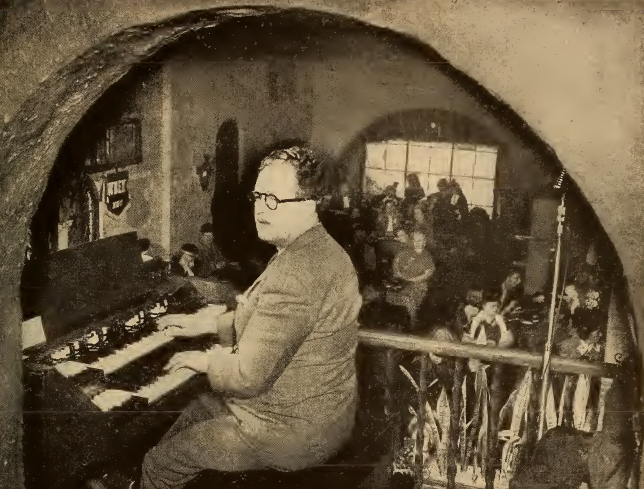
One rarely thinks of an organist as being a much-traveled man or one whose activities would run from virtually dawn to midnight. But WBEN organist Nelson Selby is currently providing the musical backbone of Breakfast at Laube's Old Spain five mornings a week, playing at the Hotel Lenox six evenings a week, and airing a Sunday afternoon organ program on WBEN. He also is heard frequently on Sundays at Buffalo's leading churches.
Selby can hardly remember the time when he wasn't in love with organ music. It started when he filled in as church organist on Sundays. After high school graduation he studied at the Eastman School of Music in Rochester and later attended the University of Buffalo. But it was long before that -- at the age of seven -- that he began his musical studies.
Curiously, Selby attracted early attention for his accordion playing as much as his artistry on the organ. Two decades ago he teamed with Mickey Sullivan, the leader of television's famous Mad Hatters band on WBEN-TV. As the Boys from Melody Lane, he and Sullivan broadcast from WGY, Schenectady and for two summers sang at famed Saratoga.
For his morning Breakfast programs Selby utilizes the Hammond organ at Laube's but on Sunday afternoon he plays the huge WBEN organ at the station's studios. At the Lenox Hotel he has his own equipment -- Hammond, celeste and chimes. He also is a consultant and salesman of Hammond organs at a local music house.
Selby has three children -- Dick, seventeen; Judith, eight and Diane, four. Dick is preparing for MIT.
From Radio and Television Mirror, July 1949
Bing Crosby: A Quick Study in Singing and Acting
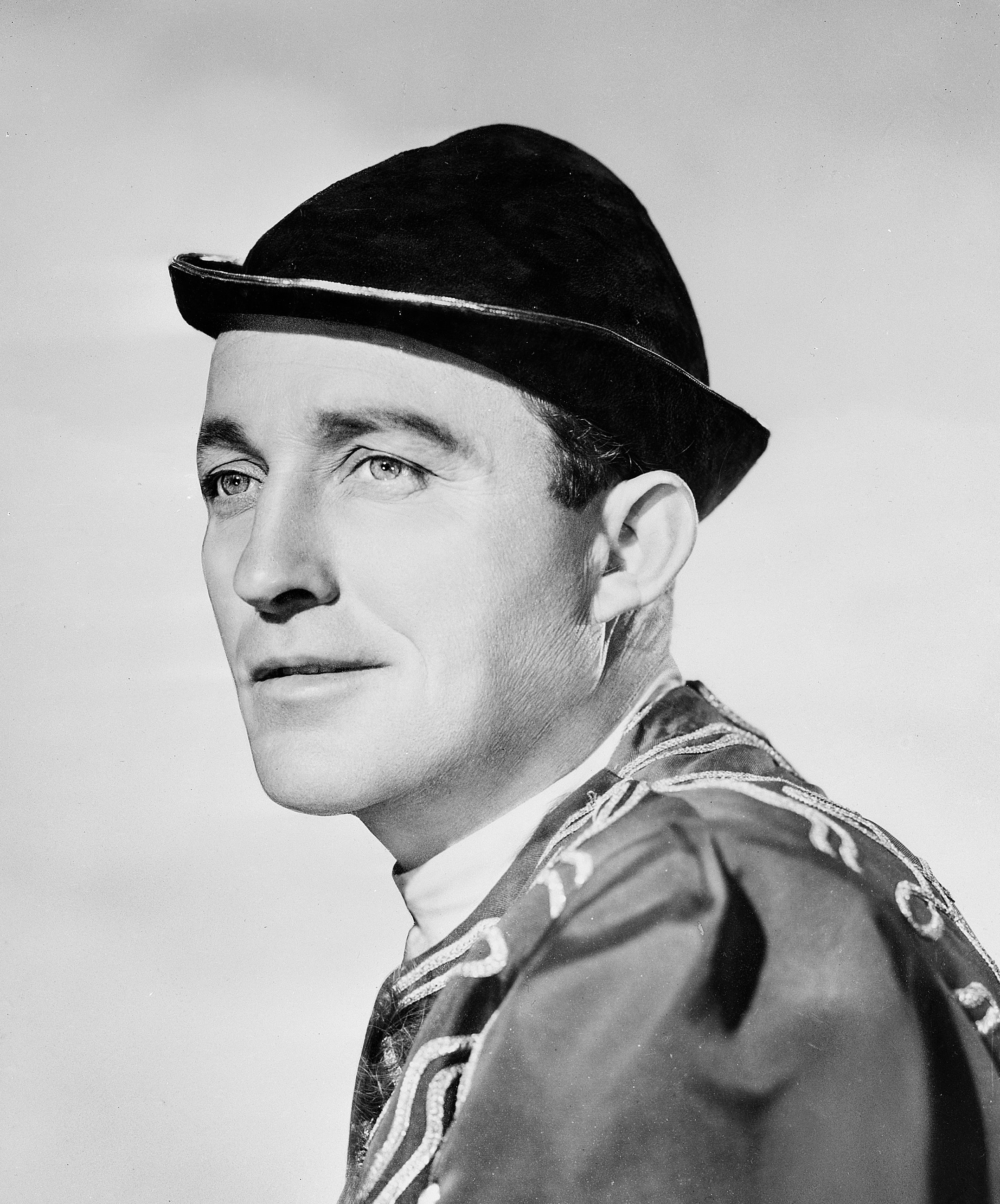
When Bing Crosby changed from "live" radio shows to transcribed ones, it was because he felt that better programs would result when they could be assembled and produced with the care and control that transcribing allows -- you can't change a song or a comedy line once it's gone on the airways, but you can always "edit" a transcription. Besides, having to show up for rehearsals and broadcasts at set times every week was working a hardship on the very busy Crosby. Transcribing, he could do his shows at his convenience.
But the rumor hounds bayed, "He can't trust his voice any more! Not hitting the high notes these days! And he's getting awfully husky, haven't you noticed?"
Says Troy Sanders, Paramount music director, who has worked with some of the biggest voices in the country: "As Bing has gotten older, his range has moved down a whole third. We feel he has developed a much richer tone. As for high notes, Bing can still produce wonderful high notes with perfect vocal technique whenever they're needed, and hold them as long as he wants. I know his range is much greater than he ever uses.
Asked if it were true that Crosby can't read music, Sanders laughed. "That's ridiculous. He reads like a flash. But I used to believe that rumor myself. Years ago I asked him, 'Why do you always want to see the music before the lyrics if you can't read music?' 'Well,' said Bing, 'I just like to see the notes go up and down.'
"I wish I could read them as well myself! In a few moments he has the music down cold -- then he concentrates on the lyrics. His interpretation of songs is by no means something he accomplishes casually -- even if the result seems so simple that everybody and his brother think they could sing a song as he does. He's developed a technique in popular songs as great in its way as that of any operatic star. Bing milks a song dry of every meaning it has."
"But isn't he awfully lazy?" I asked.
"Absolutely not! The thing is -- he's a quick study. Give him two-and-a-half pages of fresh script and he'll disappear for 15 minutes. When he comes back, he has it letter-perfect. You can pick out a song you know he hasn't sung in 20 years and he can sing it with all the words right. ... Recently we were sitting around the set of A Connecticut Yankee in King Arthur's Court when Sir Cedric Hardwicke tossed off a line of Hamlet. Bing picked it up and spoke the rest of the lines not only perfectly, but movingly. After a moment's silence, Sir Cedric cleared his throat and said, 'When did you have time to learn all that?' Bing laughed and answered, 'Oh, back in my school days I was quite a thespian.'"
Frances Clark in Modern Screen, October 1949
When Radio Memories Was Heard on KDKA
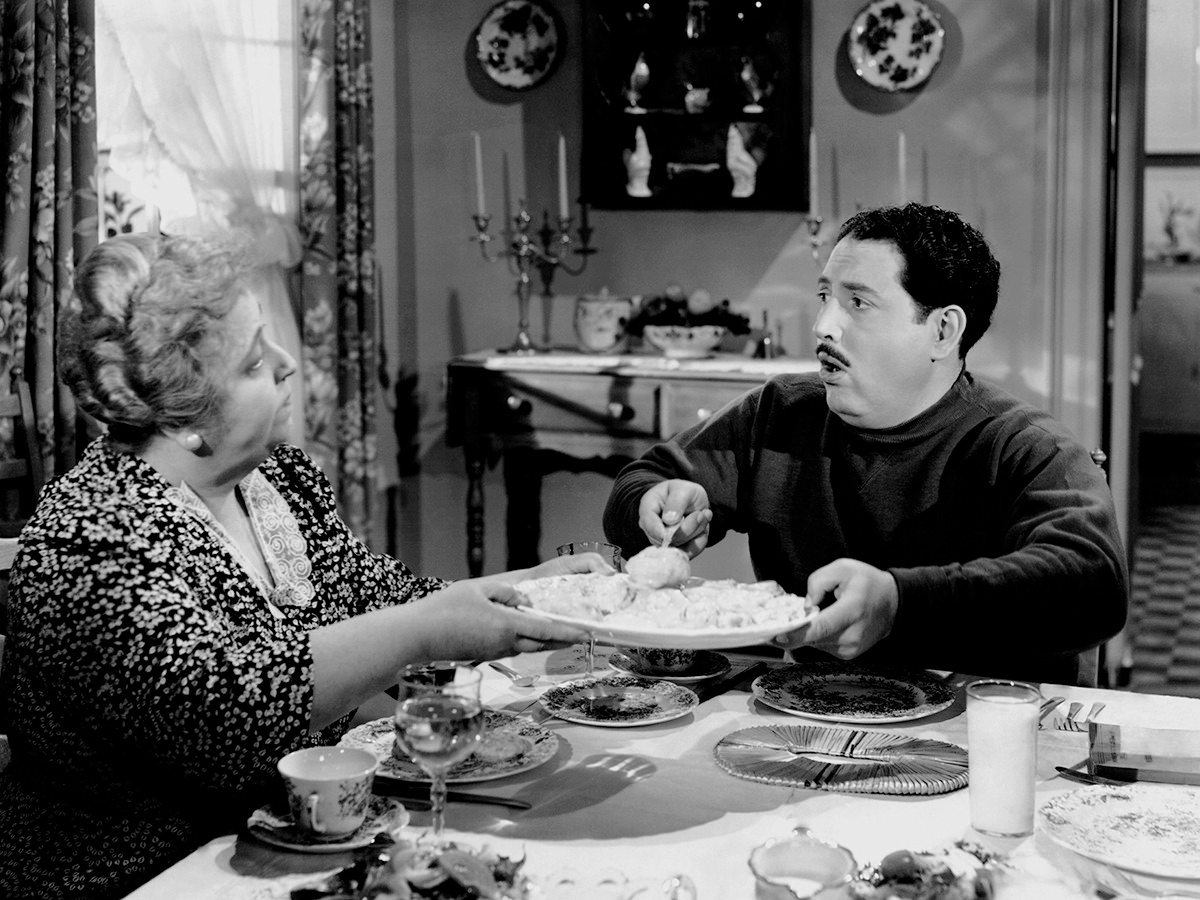
An honorable mention-winning entry in the KDKA Radio Memories essay contest:
About two years ago, a week before Christmas, I was putting up the Christmas decorations in my room and decided to listen to the radio. A little tired with the music on the FM band, I switched it over to AM. After twiddling around with the dial, I came upon KFKA and heard someone yell with what seemed like anger, "Leroy!" Which was followed by a little kid's voice angelically answering, "Yeah, unc?" And so I was then wrapped up into the world of The Great Gildersleeve. So wrapped up that I forgot about my Christmas decorations.
Every week I tuned in to hear The Great Gildersleeve, The Shadow, Musical Memories and many others. I am also into the historical snippets. My father is a history teacher at the university and it's really cool to hear those variations of major events. The shows also give me an idea of how life was in the '30s, '40s and early '50s. I am interested in that period of time, when radio played a major role in people's lives. It gave them news, weather and entertainment. It has given me memories now, such as sitting on a cold Sunday night, bundled up in my room listening to The Shadow, or hearing about an old baseball game in the summer. The program gives me a feeling of relaxation that I can forget everything for the time being and listen to the actors as they make a story come alive in my head. I look forward to it every week and will for years to come.
Jacquie Welsh in Return With Us Now, May 2002
Command Performance Radio Entertains the Troops
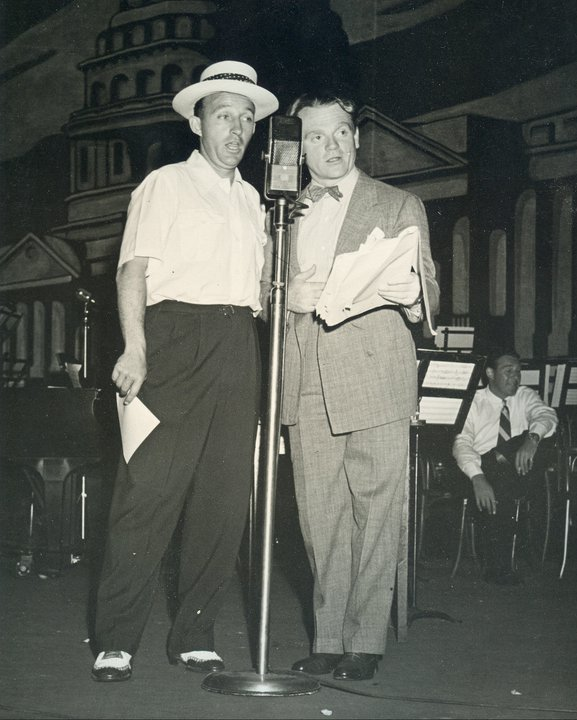
A few Sundays ago, a young and unknown radio producer sat down to a telephone in the War Department in Washington and called Leopold Stokowski, in New York. "Mr. Stokowski," he said, "I want you and your orchestra to appear on my radio program two weeks from today." Stokowski -- who won't lift a baton for less than $4,000 -- gasped. But before he could hang up, Glenn Wheaton, radio producer for Uncle Sam, explained.
"We want you to appear on Command Performance. Command Performance isn't heard in the United States. It's Uncle Sam's show for men in the armed forces serving abroad. They ask for what they want. We give it to them. We've had a bunch of requests for classical music and we'd like you to answer those requests."
"Tell me where you want me to be and when. I'll be there." It was as simple as that. By V-mail, letters and cables, requests pour into Washington from American lads serving from Alaska to the Antipodes.
The letters, themselves, provide a magnificent collection of Americana, a cross-section of the soul of America, and a wistful study in nostalgia. Good, bad, or indifferent, these men on foreign soil ask only for the America they left behind.
Command Performance is a remarkably well-produced show. There are no corny pep talks. The Army feels that fellows out in Guadalcanal and Africa know why they're there. Neither are there commercial announcements on these shows. Nearest thing to a commercial runs about like this:
"Just tear off the top of a Stuka or Zero and write us what you want on the show: We'll give it to you." And the boys have done just that. One bomber squadron stationed in England has a working arrangement with Judy Garland. She'll sing a song for them in return for each Nazi plane they shoot down. To date, Garland owes the boys two songs. A request that the world's best and worst violinists do a program together found Jascha Heifetz and Jack Benny working as a team. Brenda and Cobina brought the rubber shortage on the home front close to the boys by describing how the girls are retreading their girdles. Perhaps the most unusual request was from a sailor at Pearl Harbor. "Would Carol Landis step up to the microphone "and just sigh -- that's all?" She would and did.
Command Performances were once the prerogative of royalty. Now every soldier's a king, his command an order of the day.
The Radio Branch originated Command Performance nearly a year ago. The shows are broadcast 36 times weekly by shortwave beamed at different parts of the world and at different hours so that wherever American soldiers are on duty overseas, it will reach them during their waking hours. Having proved its power as a morale builder, on December 15, it was transferred to the Army's Special Service Division, in charge of welfare and entertainment of U. S. Troops -- with Wheaton remaining as its guiding genius.
Chief of the Radio Branch is chocky, active, sandy-haired Lt. Col. E. M. Kirby. Kirby operates from a half-finished office cluttered with uncovered telephone cables in the Army's new and fantastic Pentagon Building in Arlington. He is a red-tape-cutter; and few men know their way around in radio better than he. For years, he directed the National Association of Broadcasters, knows problems of broadcasting and programming intimately. Before Pearl Harbor -- when only ostriches and those who were blind and would not hear failed to perceive the war clouds then brewing -- Kirby went to the Army as a civilian dollar-a-year man to direct the then-new Radio Branch. After Pearl Harbor, he was commissioned and has been doing a terrific job.
Command Performance was born of a sports broadcast the Radio Branch cooked up. Boys in the field wanted to know how the baseball games were going, and Kirby arranged to broadcast the games by shortwave.
But the boys in far places then began to write in and ask why -- if they could have the sports broadcasts -- couldn't they have the good entertainment shows being broadcast in America? Kirby knew that the entertainers of America were more than willing to do their part. So were the radio stations. The result was Command Performance. Presented by a commercial sponsor, Command Performance would have a weekly talent cost of not less than $50,000. For Uncle Sam, there are no charges.
From Tune In, March 1943
Warden Lewis E. Lawes on Radio in Sing Sing Prison
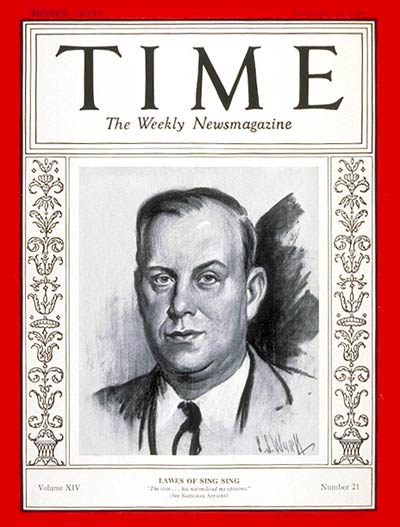
The other evening, I made one of my accustomed tours through the cell blocks. As I strolled along I could hear laughter issuing from practically every cell and could see, of course, that the radio was creating this atmosphere of joviality.
"Hello, Warden," the men greeted as I passed by. "They got a swell program on tonight."
I knew the program they were referring to. It was one of the prominent half-hour variety shows, and a favorite among the prisoners. But whether it was really as humorous as the mirth of the men seemed to indicate was a question; because prison, after a period of time, exerts an unfortunate, though to be expected, influence over the inmates incarcerated there.
Confined as they are, and with anything of tremendous importance rarely occurring to liven up their existence, they seize upon the slightest and most insignificant happening as material upon which to build something of moment to them. As a result, one can hear them laughing in the prison yard over the most trivial incident, or gravely arguing about the smallest matter imaginable.
Thus it is not difficult to understand why the remarks of a radio comedian, of a man who is expected to be comical, will move the men to hysterics, regardless of actual humorous quality.
As I continued my inspection, the hilarity gradually subsided and was replaced by an air of almost complete silence. I knew what was responsible for the change in attitude. The men were now listening to another type of program, a leading symphony orchestra; for it is our object, as far as possible, to provide a variety of entertainment for the confined men. And we do this for several reasons.
In the first place the types of inmates are as numerous as the types of programs, and therefore the tastes of all must be taken into consideration. There are many educated men to whom good music constitutes the essence of recreational enjoyment. Then there are prisoners for whom the drama holds the most desirable form of relaxation. But with practically few exceptions, every inmate eagerly listens to the news broadcasts so that he may participate as best he can in the constant movement that takes place in the world of which he was once a part.
The prisoners receive only broadcasts selected by our civilian program director, and these presentations are transmitted from our central receiving station to earphones in their cells. This means, of course, that the inmates do not have the privilege of choosing individual programs, but we so vary the types of shows that the desires of all are reasonably well satisfied.
Taking into account the practices of years ago, in which inmates, when not working, were confined completely to themselves, not even being allowed normal communication with one another, it is obvious to anyone what a tremendous blessing the radio is in the lives of men otherwise restrained from any direct contact with the world outside.
And in this connection, the radio medium contains features not possessed by the most complete library. It establishes a relationship with the living, vibrating human being other than with the cold, dead print of a book or of a publication.
But while a library can never be replaced even by the most advanced radio methods or technique, nonetheless what the men need most in prison is that which everyone on the outside appreciates, perhaps the least: contact with his fellow man. And radio provides this vital and valuable link for the man behind bars.
Lewis E. Lawes in Radio Guide, February 11, 1939
Major Bowes: The King of Radio's Amateur Hour
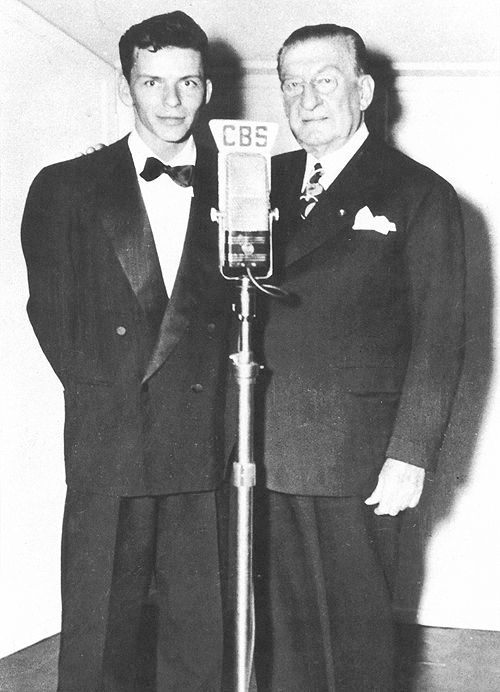
It's a bit puzzling, on first meeting Major Edward Bowes, to decide whether you are looking at a churchman or the head of a prosperous money-lending agency. His manner is faintly pious; his eyes are as cold as a polar bear's paws.
Still, it's his nose that really gets you. It is a great, engulfing over-riding thing which makes Jimmy Durante's look like a wemple. The man behind it is about 66. He has hair which is thin and vaguely orange in color, he is faultlessly dressed, gracious, suave. Perhaps the prime quality in the success of Major Bowes is the fact that he approached radio with stability of big business -- he was already a big and successful business man in the theatrical world when radio came along -- at a time when many of the large figures in radio had no such stability.
Amateur hours were not new when the Major blossomed into a front-page radio man with his amateur hour. It was an old theatrical stunt, but the Major had the foresight -- or hindsight -- to realize that here was a program potentiality already tried in the theater. It remained for Bowes to adapt it to the microphone in such a big way that it immediately captivated the imagination of every theatrically ambitious youngster or oldster in the country -- and made it one of the most widely heard programs in radio.
For years back Major Bowes was an American habit, something like the Sunday afternoon nap. Millions of people listened to him. His titles were many and diverse. He was honorary mayor of 67 cities, honorary fire chief of 57 cities, honorary police chief of 51 cities, honorary editor of 30 newspapers. In New Jersey he was honorary president of the Homing Pigeons' Club. Ohio elected him a member of the Monday Afternoon Archery Society. The Ancient Order of Beekeepers, of Maryland, took him in and made him one of their own. In New York State he was honorary second baseman of the Albany Baseball Club. He owned a stable of racing horses: He had three yachts, eight automobiles, four chefs. His salary was around $430,000 a year, or roughly about a quarter of a million dollars greater than that of his radio sponsor, Walter P. Chrysler, the automobile manufacturer.
In Yoga philosophy the life-giving element is called prana. It is no exaggeration to say that amateurs have been Major Bowes' prana. Tens of thousands of amateurs have appeared on his program, most of them for just about four minutes. And without any noticeable theatrical talent of his own he has made them pay off. His voice just escapes being commonplace. He has a pleasant, smooth personality. Hundreds of small clergymen have the same. All things considered, Bowes' success is a curious and remarkable phenomenon which can be explained in part at least by something in the American people: the desire, perhaps equally curious, to see and hear aspiring youngsters make their first taut effort for recognition.
Major Edward Bowes is a San Francisco boy. He was born around the year 1876 into a relatively poor family. His father. a weigher on the docks, died when Bowes was a youngster, and the boy had to leave school and find a job. As a schoolboy it happened that he was an uncommonly good penman and he turned this skill into money, writing fancily trimmed greeting cards in the window of a San Francisco store. Later on he became a real-estate agent and made good at it. Still later he became one of a group which put up the Capitol Theatre, in New York. From its stage, in 1922, was broadcast the first radio program offered in a theater.
The late Samuel F. Rothafel (Roxy) presided over these broadcasts from the Capitol Theatre until 1925, and when he left Bowes took over. He began his amateur hour in 1934 as a sideline. It became so popular that at one time about 300 amateurs a week were broke and stranded in New York City. In the early days, according to the Bowes office, 2,000 applications to appear were received every day.
According to several radio polls, the Maior these days shows signs of being winded. Hooper ratings, compiled by C. E. Hooper, Inc., show that in the past two years Bowes' percentage of total listeners has dropped from 40.1 to 31.0. In the same period his average national rating dropped from 17.5 to 13.9.
Once there were 14 of the highly publicized Major Bowes units which traveled through the country winning scrolls and keys to cities, playing vaudeville and moving picture theaters. Now there are three. The amateurs themselves are the Major's sharpest critics. It is clear that not all of them could become stars, and nothing so embitters the ambitious as failure. Professionals have also been used in these units and the amateurs do not always stand up well by comparison. This is another source of resentment.
It is undoubtedly true that of the thousands of youngsters who have appeared on Bowes' programs, less than half a dozen have won any real success in show business.
Watching Bowes as he works with the amateurs Thursday nights, you are aware of no excessive warmth between him and the talent, no camaraderie, certainly no careless rapture. You are aware of an impersonal business man being impersonal at his business. He just misses being aloof. On the other hand there is probably no place for anything more than that. He is at least impartially impersonal. There is his medium smile for the amateur as he approaches the microphone, his well-done smile when the youngster has done his bit. The rare smile, according to radio legend, is for the photograph of Bowes and the amateur that goes out to the hometown newspaper.
In New York, in radio's inner circles, it is pretty generally thought that amateur hours -- not necessarily Bowes' but all amateur hours -- are on the way out. The war naturally makes all such speculation just that: speculation. The fickleness of public taste, in Bowes' case anyway, is discounted because of his reputation and following, and the fact that he has been a radio personality for close to 20 years, a record performance.
From Tune In, March 1943
Subscriptions

People
Topics
Projects
Statistics

This blog has been published since May 29, 2020 (a span of 2,082 days).
Top 10 Articles
- The Marriage of Don Ameche and Honore Prendergast
- The Earliest Radio Shows of the 1920s
- Early Radio Announcers Invented Their Profession in the 1920s
- The Night Arthur Godfrey Fired a Singer On Live Radio
- The Great Radio Detectives of the 1950s
- The Mythical Town of East Tincup, Colorado
- What's in a Name? A Lot in Portland Hoffa's Family
- Why Vladimir Horowitz Stopped Performing in the 1930s
- The Home Life of Jack Benny
- Phil Harris: Why Alice Faye Moved from Movies to Radio
Winnetoba Radio hosted by Workbench
