Escape With Us Now -- To the Bookstore
In the seven years that Escape was on the air, over 200 broadcasts were made. If, in retrospect, the years 1947 through 1954 were some of radio's best years, this body of Escape programs is one very good reason why.
I think that one of Escape's strengths was in the careful selection of material on which writers based their scripts. Many of the shows, especially in the '40s, were adapted from outstanding works by American and British authors. Great stories, put into radio play form by talented writers, proved to be an unbeatable formula. No show, not even Suspense, was as consistently exciting and entertaining as Escape.
I thought it would be interesting to dig through the fiction in my basement and see how many of the progenitors of the old Escape shows I could find. I followed this up with a trip to the Waldenbooks and B. Dalton bookstores in the Aurora Mall, and can now recommend several books one might turn to to find some of the tales of adventure immortalized on Escape. The advantage in doing so is the inevitable discovery of stories which were not turned into radio dramas, but nevertheless provide top-notch plots and exciting locales to which the old time radio buff can once more Escape.
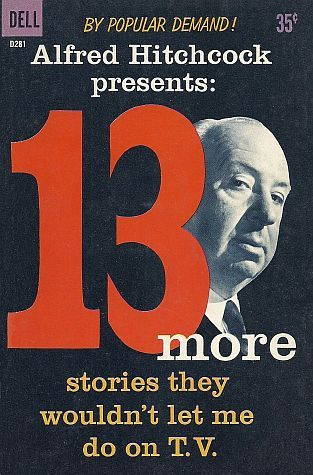
In 12 Stories They Wouldn't Let Me Do on TV, Alfred Hitchcock supplies us with "How Love Came to Professor Guildea" by Robert S. Hichens, and "Casting the Runes" by Montague R. James. Both are entertaining stories of the supernatural, and in the '50s the latter was made into an engrossing movie, whose title I now forget, starring Cornell Wilde. Another Hitchcock collection, 13 More Stories They Wouldn't Let Me Do on TV, contains "The Most Dangerous Game" by Richard Connell. This unusual story of hunter and hunted had already been made into a movie in 1932 (being shot at the same time as King Kong, on the same set, and with some of the same actors), and adapted for radio by Arch Oboler during the war years before ever coming to Escape. The movie was remade in 1946 as Game of Death, and in 1956 as Run for the Sun. It is obviously a worthy piece of fiction. The anthology Masterpieces of Adventure, edited by Louis Morris, also contains the story, plus another selection which inspired one of the most famous of all Escape shows, "Leinengen Versus the Ants" by Carl Stephenson.
"An Occurrence at Owl Creek Bridge," which translated into an exceptional drama, even for Escape, can be found in Ghost and Horror Stories of Ambrose Bierce, published by Dover, and I also found it in another collection of Bierce's stories in a Waldenbooks store. She, by H. Rider Haggard, was the author's second, and perhaps most outstanding novel, but many of its fascinating details and plot devices were left out of the 30-minute radio version. The book is readily available in a Ballantine paperback, and I highly recommend it. This story also appeared on the silver screen, twice.
"The Open Boat" by Stephen Crane is included in a Signet Classic The Red Badge of Courage and Other Stories, and the highly enjoyable "A Diamond as Big as the Ritz" is in Babylon Revisited and Other Stories by F. Scott Fitzgerald. I also found "Typhoon" in Great Short Works of Joseph Conrad, a Perennial Classic. "The Fall of the House of Usher" is often included in collections of Edgar Allen Poe's stories, and there are many of these. The Time Machine by H.G. Wells is likewise easy to come by.
All of the above stories were done on Escape at least once, and all books listed are paperbacks still available through the publishers, if not directly off the bookstore shelves. I've recently purchased two hardbacks from B. Dalton which contain reprints of stories from London magazine of the late 18th and early 19th centuries, including all the original illustrations. At $6 apiece, I considered them to be a rather good buy.
The first of the two, Rivals of Sherlock Holmes, edited by Alan K. Russell, should not be confused with a paperback by the same title edited by Hugh Greene. The Russell book contains a completely different collection of stories, including "The Story of the Lost Special" by Sir Arthur Conan Doyle himself. Sherlock Holmes does not appear in the story, nor in any of the other three Conan Doyle stories included in this collection. Still, having read "The Lost Special," I cannot help but feel that the services of London's greatest detective were sorely missed by Scotland Yard.
The Collector's Book of Science Fiction by H.G. Wells is a bonanza, containing "The Country of the Blind," which was done three times on Escape, and "The Man Who Could Work Miracles," which was done twice. Also included is a novel whose title should be somewhat familiar to old time radio fans -- The War of the Worlds.
As you see, Escape's sources for stories were somewhat varied, but always excellent -- just witness the number of them that attracted the attention of Hollywood script writers. I hope you'll soon be reading your way through some of the above mentioned books, and pausing now and then to say, "Ah, but wouldn't this have been a great story for Escape!"
Daniel Daugherty in Return With Us Now, January 1979
Rudy Vallee's NBC Questionnaire
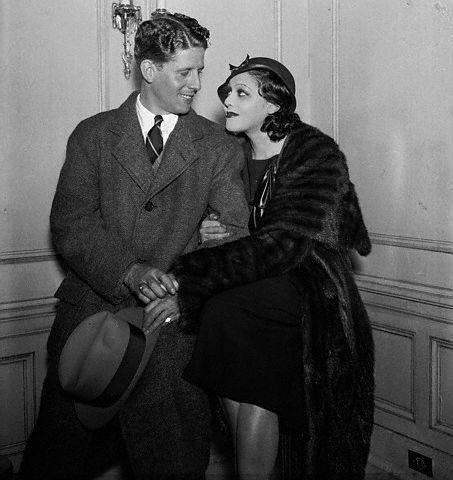
The document rests in the files of the press department of the National Broadcasting Company. It is a questionnaire, duplicates of which are submitted to all NBC stars of prominence. The questionnaire was answered by Vallee himself, painstakingly and neatly typed by his own musical fingers. The questions were answered in 1932, after the crooner's marriage.
Name (professional): Rudy Vallee
Nickname (in the studios): Rudy
Addresses: Office 111 West 57th St., phone Cir 7-4680; home 55 Central P West.
Do you have an NBC contract? Yes, with George Engles
Manager: None
Personal press agent: None
Talent (contribution to radio -- what do you do): Direct an orchestra and sing popular songs.
Your current programs: Fleischmann's Yeast Hour, Thursday from 8 to 9 pm Eastern daylight time
Height: 6 feet
Weight: 150 pounds
Complexion: Light
Hair: Brown
Where and when born: Island Pond, Vermont; July 28, 1901
Parents (Who were they? Did their leanings or characteristics have any bearing on your radio success? Were they talented?): Kathryn Lynch Vallee -- amateurishly musical -- sang a bit and played a little violin. Charles Alphonse Vallee -- was musical but never used his ability. Managed a theater as a sideline.
Are other members of your family musically or dramatically inclined? Kathleen Vallee Lenneville (sister) plays piano and organ -- and teaches piano.
Marital status (wife or husband's name): Fay Webb Vallee
Children (names and ages): None
Radio history (first audition): No audition. First broadcast was from Heigh Ho Club in February 1928, directing seven piece orchestra as nightclub broadcast.
First professional engagement (Any special circumstances? Anecdotes? Humorous incidents? Saxophone soloist at Strand Theater, Portland, Maine -- 1921. Had been head usher at same theater only two years previously. Chief electrician in the theater had given me my first alto sax. Rudy Wiedoeft was my idol -- his records showed me solo possibilities and I had begun studying solos assiduously. I had not learned the solo well enough for his appearance, and that nervousness of hands made me skip whole measures. The audience seemed to like it though.
Rudy Vallee in Radio Guide, June 23, 1934
Richard Diamond, a Girl's Best Friend

The Richard Diamonds now in circulation are a must for the detective show freaks in the OTR audience. Dick Powell, the flip lady-killer crooner, is perfect as the flip lady-killer crooner detective. With more humor than Howard Duff's Sam Spade, with more unbelievable scripts than I Love a Mystery, with more dazzling chicks than Mike Shayne, the Richard Diamond series must be rated No. 1. On most shows, Powell answers the phone with his newest slogan for his business, like "Diamond speaking, a girl's best friend," or "Diamond's tough when he's in the rough."
The shows are far out too. Take "The Gray Man" (02/16/1951), who has been poisoned and is gradually turning colors, or the "Blue Serge Suite" case where every blue serge suite in town is disappearing! Or the time Rick takes a job in a butcher shop where "The Stakes Are High."
Helen is the perfect girlfriend. Unlike most detective's girls, she stays out of every case. You know Margo Lane had to be snooping over Lamont's shoulder. And Ann Williams, Casey's sidekick in crime photography, had to be taking every other picture. Edith Miller in Mr. DA even helped to solve crimes for goodness sakes! But not Helen. She waits in her rich, stately penthouse for Rick to finish his case, and when he finally shows up, he croons the Camel commercial, the kiss and fade out ... Diamond, you're a chauvinist pig but I love ya!
Here are the Diamond cases that I have heard. Maybe there are others you know of to add to the list.
- 05/29/1949: Blackmail
- 06/19/1949: Three Murder Suspects
- 06/??/1949: Grounds for Divorce
- 08/24/1949: Phony Seance Racket
- 01/19/1951: Man with the Scar
- 01/26/1951: Rollins Case
- 02/02/1951: Gaspary Case
- 02/09/1951: Blue Serge Suite
- 02/25/1951: Lady in Distress
- 03/02/1951: Red Horse
- 03/09/1951: Butcher Shop
- 03/23/1951: Monsieur Beauchard
- 03/30/1951: The Carnival
- 12/21/1951: Xmas Story
- 12/28/1951: Plaid Overcoat
- 01/04/1952: Merry-Go-Round
- 01/11/1952: White Cow Case
- 01/18/1952: Simpson Case
- 01/25/1952: Al Brennar Case
- 02/01/1952: Gerrbalki Case
- 02/08/1952: Eddie Burke Case
- 03/14/1952: Dixon Case
- 03/21/1952: Hank Burton Case
- 03/28/1952: Mr. Walker's Problem
- 04/04/1952: Enigma of Big Red
Undated Shows
- Gurman the Gunmaker
- 8:00 Killer
- Moran Suicide
- Murder in Oklahoma
- An Xmas Carol
- Big Foot Grafton
- Mona Lisa Case
- Jacobi's Back in Town
- Ice Pick Murder (Rexall sponsored)
- Baxter Matter
- Police Officer Symposium in Chapel Hill
- George Lexington Case
- Nancy Fowler Case
- No One Was Murdered Case
- Marilyn Conners Case
From Illustrated Press, November 1979
Wendell Niles and the War of the Worlds
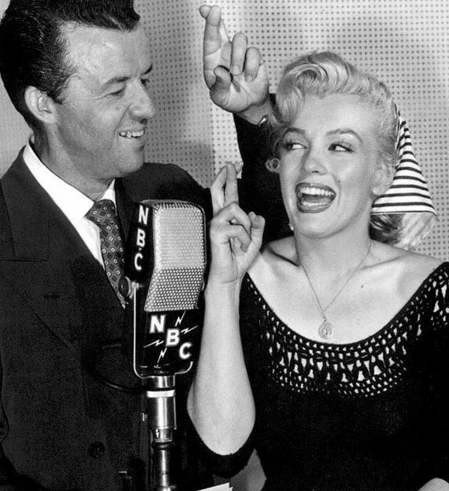
Wendell Niles was part of that elite period when radio announcers were indeed as well-known as the programs on which they worked. Involved with virtually every aspect of show business for over 65 years, he certainly has had a career to look back upon.
Born in Montana on Dec. 29, 1904, Wendell Niles' first professional experience came in 1923 when he organized an orchestra. This proved to be quite a successful venture as Niles and His Montanans toured the country (and even other parts of the world) until 1927. The stock market crash in 1929 brought an end to that crazy decade of the 1920s and Niles was forced to bow out of the music business.
Deciding to pursue another field, Niles enrolled at New York University to study aeronautics. He returned to Seattle, which he now called home, and opened a flight school. Everything went peachy until the last minute, when some creditors clamped down on the whole project, and that was the end of that.
So Niles and his wife Ann (whom he had married in 1928), plus their two sons, Wendell Jr. and Denny, packed up and headed for Hollywood to try show business again. Niles began auditioning as an announcer, but encountered an unusual stumbling block: his younger brother Ken had already made quite a name for himself as an announcer, and "Wen Niles" was just a little too close to that name for the radio producers' comfort. "Are you trying to cash in on Ken Niles' reputation?" they asked.
Thus, Niles originally made the rounds of the studios under the name "John Dennison" (his mother's maiden name), and finally succeeded in landing his first network announcing job: on the George Burns and Gracie Allen Show, at which time Burns assigned him the monicker of "Ronald Drake." But with his own reputation now established, Niles was subsequently able to revert to his real name.
Niles likes to relate how he was actually the person responsible for making Orson Welles into a national celebrity. In 1938, Niles was announcer for NBC's Chase & Sanborn Hour, which boasted emcee Don Ameche and featured comedian Edgar Bergen (with Charlie McCarthy, of course). The competition across the dial at CBS was an obscure anthology show, Orson Welles' Mercury Theatre. The Chase & Sanborn Hour was such a whopping ratings success that it was considered foolhardy to put any type of worthwhile show in the timeslot against it.
As almost every student of radio now knows, on October 30, 1938, the Mercury Theatre presented its modernized dramatization of H.G. Wells' science fiction novel The War of the Worlds, concerning Martians invading the Earth. But when the program began, hardly anyone was listening; most of the radio audience was tuned to NBC to hear Bergen and McCarthy's latest witticisms. Somewhere around 10 minutes into the broadcast, Ameche introduced Niles "with a word about Chase & Sanborn Coffee." As Niles began to deliver his commercial, listeners across the nation participated in a tradition that continues to this day: They began dial-twisting. Reaching CBS, they were confronted by an apparently hysterical newscaster screaming that Martians had landed in New Jersey!
That did it. The rest was history, Orson Welles was a celebrity, and Niles now says, "If it hadn't been for me reading that coffee commercial, no one would have ever tuned to CBS to see what else was on!"
From Jot 'Em Down Journal, August 1989
Why Science Fiction Didn't Last on Radio
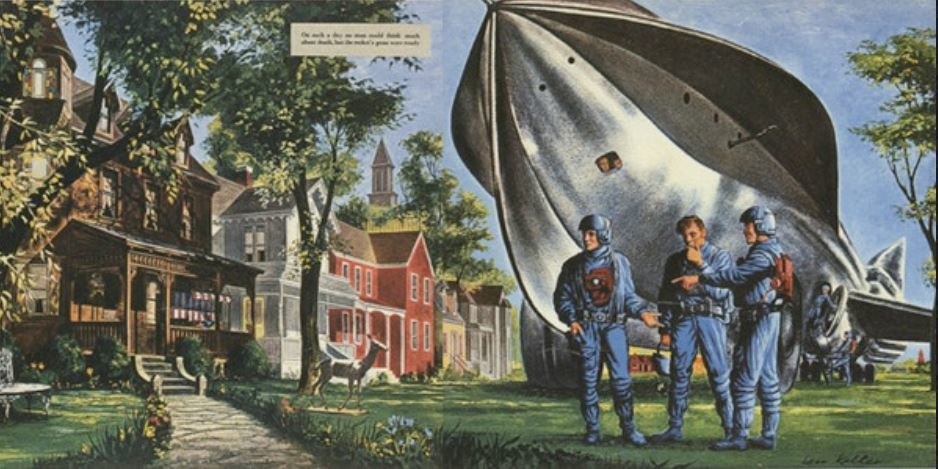
They should have made the perfect pair. Think of the action, the drama, and the adventure of science fiction -- now add a dash of good sound effects, a dash of imagination, and away you go, off on the hottest radio series ever.
And yet ... the marriage didn't last.
It's too bad, too. The five United States SF series, which should have been the best shows in radio history, were weak and short-lived. They ranged over the years 1945 to 1958, yet the longest run was only three years, Dimension X is touted as the best, but even that falls way short of its potential. How come?
One of the biggest reasons is timing. If only SF had hit radio sooner, it might have stood a better chance. As it was, by the time SF gained enough popular appeal, radio was already being overshadowed by TV.
Also, science fiction was a popular medium when it hit radio in 1945. Of course it had come a long way from the first SF novels of Jules Verne and H.G. Wells. Even so, it took until April 1926 -- only 19 years before the first U.S. SF radio series -- for the first SF magazine Amazing Stories to be published by Hugo Gernsback. And though this and other magazines helped to create some popularity for SF, it was a long time before SF fans were taken seriously. Most people considered them a bunch of crackpots. Probably the October 30, 1938, broadcast of War of the Worlds on the CBS Mercury Theater of the Air did little to help public opinion. The broadcast was aired without commercials or station breaks, so the show convinced a great number of people that the world was really going to end! Because of this, public outrage was vented against CBS and Orson Welles (the star of the show) for the production.
So the majority of the American public were just beginning to understand SF when it came to radio. Britain was the leader with long SF series, sometimes running two to six hours. Suspense and Escape also produced occasional SF shows in their series. But the first U.S. series devoted to SF was aired in 1945 called Exploring the Unknown. The shows, aimed at the "science at work, searching for knowledge that will shape your future, were produced by Sherman H. Dryer for broadcast on Mutual. Revere Copper and Brass Co. sponsored the show for two years from Dec. 2, 1945, through 1947. Then the show went to ABC for one season as a sustained program.
Mutual's second series, Two Thousand Plus, explored the years beyond 2000 A.D. Dryer also produced this show which began March 15, 1950, and ran through the 1951 season. Mutual then offered a third series, Exploring Tomorrow, during 1957 to 1958. This rather obscure series asked you to "step into the incredible, amazing future."
NBC offered the U.S. its first SF series with broad appeal to adults by way of the show Dimension X. This series, beginning April 8, 1950, and running through Sept. 29, 1951, concentrated on adventures in time and space "told in future tense." The show dramatized works by writers such as Ray Bradbury, Kurt Vonnegut, Isaac Asimov, and Robert Bloch. Ernest Kinoy, an NBC in-house scriptwriter, also contributed a story or two, in addition to adapting about half of the stories from the original pieces.
Dimension X was also one of the first shows to be recorded on tape. The story has it that the recording technique was so primitive that "Mars is Heaven," written by Ray Bradbury, had to be recorded three separate times -- because the NBC engineer, in editing the show, kept erasing it!
NBC's second attempt at SF, X Minus One, appeared in April 24, 1955. In some ways it can be considered as an extension of Dimension X, since X Minus One used several of the earlier series' stories. This time, the series lasted three years, going off the air on January 9, 1958. NBC tried to make a comeback with the show in the 1970s, but due to bad scheduling, and lack of publicity, the show gained few listeners and was dropped again.
X Minus One also employed more comedy than the earlier series. Kinoy again adapted about half of the scripts, and George Lefferts was a frequent contributor. Fred Collins announced, and Daniel Sutter directed. John Dunning, in his book Tune in Yesterday, notes that X Minus One offered some of the best drama of the mid-1950s and was also one of the few places where radio veterans such as Santos Ortega, Jack Grimes, Joe Julian, Reese Taylor, Luis Van Rooten, Joe DiSantis, etc. could find work.
Both Dimension X and X Minus One broadcast some of the best of SF radio. Dimension X's "Mars in Heaven"and "Martian Chronicles" by Ray Bradbury can both be considered classics. "The Light" by Poul Anderson is one of the excellent radio shows aired on X Minus One. But, all in all, the SF series cannot compare to many of the other radio series throughout its history. For instance, Escape easily beats any of the SF series in terms of excitement, adventure, and sophistication.
Probably one of the biggest problems of SF radio is the nature of SF itself. In creating science fiction -- a "theory" about what could happen in the future, specifically with regard to scientific achievement -- the authors of the '50s seemed to limit themselves. For one reason or another, they tied themselves to their own time and place and then saw all of the future in these terms. Thus, for the most part, the stories produced on X Minus One are about human beings doing depressingly human things, only in outer space.
Also, X Minus One worked in cooperation with Galaxy Science Fiction Magazine. Horace Gold edited the magazine at that time, and though many top authors were published by him, Gold appears to have had a rather narrow-minded view of what constitutes good science fiction. He liked slick writing and would reject even very original concepts if they did not fit into his editorial framework.
As a result, the stories -- and therefore the shows -- are often alike. There's usually no hint of anything nice or enlightening to be found in outer space -- only humdrum tales of machines that don't work, near fistfights in spaceships and often human beings condescending to straighten out some planet's business. To the 1970s listener, these storylines can seem corny. Also, there's no real sense of the moral crisis that inevitably contributed to the adventure in so many of the Escape programs. In comparison, the SF series seem like space soap operas.
But that doesn't mean the SF series should be shipped to outer space! The stories are fun, some of them are very exciting, and they make for good listening. My only regret was in thinking what could have been.
Janet Chapman in Airwaves, May 1977
The Five Radio Networks of NBC
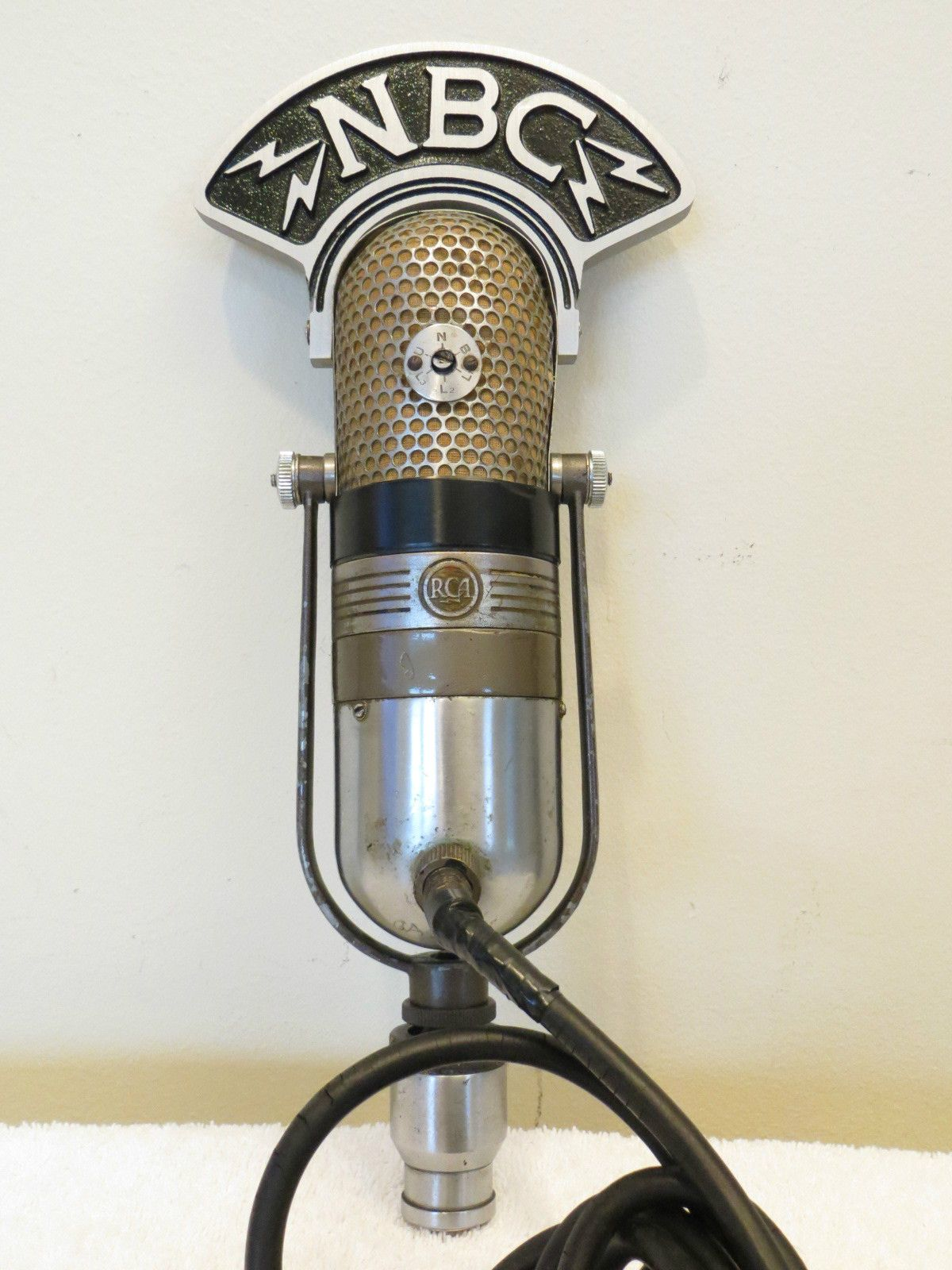
In its early years NBC (the National Broadcasting Company) operated five different broadcast networks all labeled by color: Red, Blue, Orange, Gold, and White. OTR hobbyists are probably aware of the Red and Blue Networks but may not be familiar with the other colors.
On Jan. 4, 1923, the American Telephone and Telegraph Company (AT&T) started "chain" (or network) broadcasting which was then defined as "simultaneous broadcasting of an identical program by two or more connected stations." A rival network owned by the Radio Corporation of America (RCA) broadcast its first network program in December of that same year. In 1926 AT&T abruptly withdrew from the broadcasting field and after a series of complicated maneuvers RCA purchased the entire operation of their rival for one million dollars. They now owned both networks and decided to keep both running as separate entities. On Sept. 9, 1926, RCA formed NBC which had its premiere broadcast on Nov. 15. This broadcast joined 22 stations in the east and midwest which had basically made up the old AT&T network. This was the foundation of the Red Network. The Blue Network, coming mostly from the former RCA stations, was started up two months later.
There is some discrepancy on the number of stations in each of these two networks at the beginning. Some sources state that 25 stations constituted the Red Network and six others the Blue. What appears to be more likely was that there were 18 in the Red, five in the Blue, and eight that were available to supplement the "basic stations" of either network.
In practice, NBC was "national" only in its name since its programs only reached as far west as Denver. In December 1926 the network's board of directors voted to establish a third NBC network on the west coast. This was the Orange Network which was headquartered in San Francisco. The Orange Network had its inaugural program on April 5, 1927, and began regular broadcasting six days later. Basically the network "recreated" the same programs as were heard in the east over the Red Network. In 1936 the Orange Network dissolved into the Pacific Coast Red Network.
The Gold network started in 1931. This included five stations in the West and gave an outlet for recreations of the NBC Blue programming. NBC Gold was discontinued in March 1933 with some of the programs switching over to NBC Orange.
I've been unable to find much information on the NBC White Network. I do know that it was religious in its content and operated in the late 1920s and continued into the '30s. This was also referred to as the Watchtower Network.
Where did the networks get their color-coded names? One of the common stories was that they were named after the colored phone jacks used by the telephone company for switching. The real reason is just as bizarre. NBC documents tell us that the use of colored pencils to draw network lines on a map gave them their names.
The Federal Communications Commission (FCC) felt that NBC should not be allowed to operate two national networks and demanded that one of them (Red or Blue) be sold. The Supreme Court upheld the FCC position and so the Blue Network was put up for sale. Edward Noble, the maker of Life Savers, purchased it for $8 million. Everything that had belonged to the two networks now had to be divided up: stations, microphones, even wastebaskets. On Oct. 12, 1943, the sale was approved and Noble named his new network the American Broadcasting System (ABS). A year later this was changed to American Broadcasting Company (ABC).
From Illustrated Press, February 2005
All-Time Favorite Radio Shows
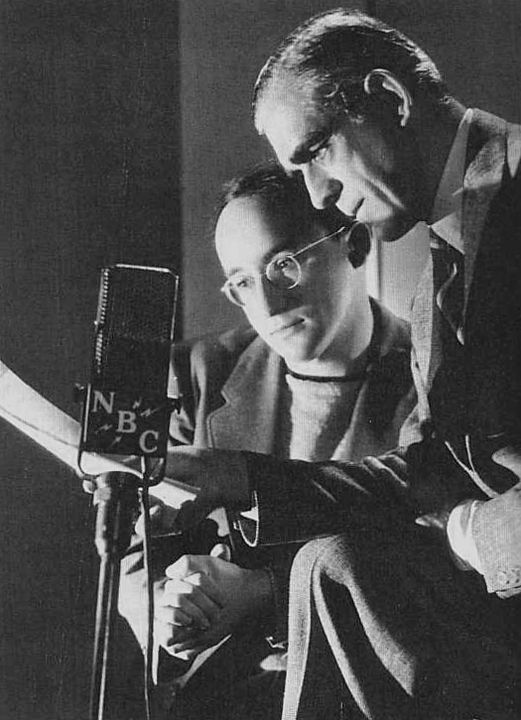
Radio's Best Private Eye Show: This was a tough one. There were some real dandies in this category and picking the best was pretty hard. Philip Marlowe was great, as was Michael Shayne. The Fat Man and Mr. and Mrs. North were also tops. Johnny Dollar and Nero Wolfe were tough to beat. After much sifting and sorting, I did manage to come up with one name ... Sam Spade. He was rough and tough, sardonic and sarcastic, a ladies man, and smart as a whip. (Just how smart is a whip?)
Howard Duff played Spade to the hilt and the role fit him like a glove. Even today, hearing Duff's voice on TV, I am reminded of Sam Spade and all the adventures I indirectly shared with him. Spade was the best and I really dug him! (Sorry, I couldn't resist the pun.)
The Best Sidekick in Radio: This is another category that is overflowing with names. Almost every comedian had a sidekick. Many times the sidekick would be funnier than the star of the show. Jack Benny and Fred Allen specialized in this. Often it was a case of the sidekick topping the stars' joke over and over again. Network radio didn't really have too much ad-libbing, so when you heard Rochester topping one of Jack Benny's gags you knew that it was all planned. And it worked just fine. The star would get his laugh and then bask in the laughter from being topped by his sidekick.
To me, the best of these sidekicks was Elliott Lewis. He played a character named Frankie Remley and/or Elliott on The Phil Harris and Alice Faye Show. Frankie was a left-handed guitar player who always had a scheme that would get Phil and himself in trouble. The schemes were always outrageous and downright flaky. Every one of them was surefire things that couldn't go wrong but always did.
Any time Phil needed someone to repair or do something, Frankie would say, "Hold it, Curly. I know a guy ..." Well, Phil Harris knew the guy to do the job on his radio show ... Elliott Lewis.
The Best Performance by a Radio Actor: It might seem like old stuff to those who have been collecting radio shows for a long time, but stop and think. What was one of the very first radio shows you ever grabbed onto? Chances are that it was the Mercury Theater's version of The War of the Worlds. Right? This particular show became part of America's history and the star of that show became world famous. Orson Welles is the winner here, with second place not in sight!
The Best Performance by a Radio Actress: It seems that most of the really memorable radio performances were done by one woman, Agnes Moorehead. For a long time she brightened up the airwaves as The Shadow's girlfriend, Margo Lane, but she reached her peak as the terrified invalid on the classic Suspense show "Sorry, Wrong Number." This performance set a milestone in radio drama and a new standard for other radio people to strive for. It was the new state of the art. Agnes Moorehead was perfect!
The Best Horror Type Program: At one time or another most of the dramatic radio shows tried their hands at horror. Many times with varying degrees of success. A few specialized in this genre, most notably Quiet, Please; Dreadful John at Midnight; Macabre; and Inner Sanctum. The best of them all, however, was Arch Oboler's Lights Out. If you remember an old radio show that really made your skin crawl, chances are that it was on the Lights Out show.
From slimy creatures that crawled out of your cellar to a chicken heart that continued to grow, to the sudden disappearance of everyone on earth, Lights Out covered them all ... and more! My favorite had a person turn inside out but still remain alive. Think about it. I did and it scared me silly. Exactly what it was intended to do. Lights Out, a legend in its own time!
These have been my own personal picks. You probably don't agree with some or all of my selections but that's what made old-time radio shows great. There was something for everyone.
From Illustrated Press, March 1985
Subscriptions

People
Topics
Projects
Statistics

This blog has been published since May 29, 2020 (a span of 2,083 days).
Top 10 Articles
- The Marriage of Don Ameche and Honore Prendergast
- The Earliest Radio Shows of the 1920s
- Early Radio Announcers Invented Their Profession in the 1920s
- The Night Arthur Godfrey Fired a Singer On Live Radio
- The Great Radio Detectives of the 1950s
- The Mythical Town of East Tincup, Colorado
- What's in a Name? A Lot in Portland Hoffa's Family
- Why Vladimir Horowitz Stopped Performing in the 1930s
- The Home Life of Jack Benny
- Phil Harris: Why Alice Faye Moved from Movies to Radio
Winnetoba Radio hosted by Workbench
